The Gap Between Health Tech Demos and What Clinics Actually Deploy
Investors see dashboards. Patients see waiting rooms. What I've seen building AI across 15+ clinics in three countries, and why the gap keeps widening.
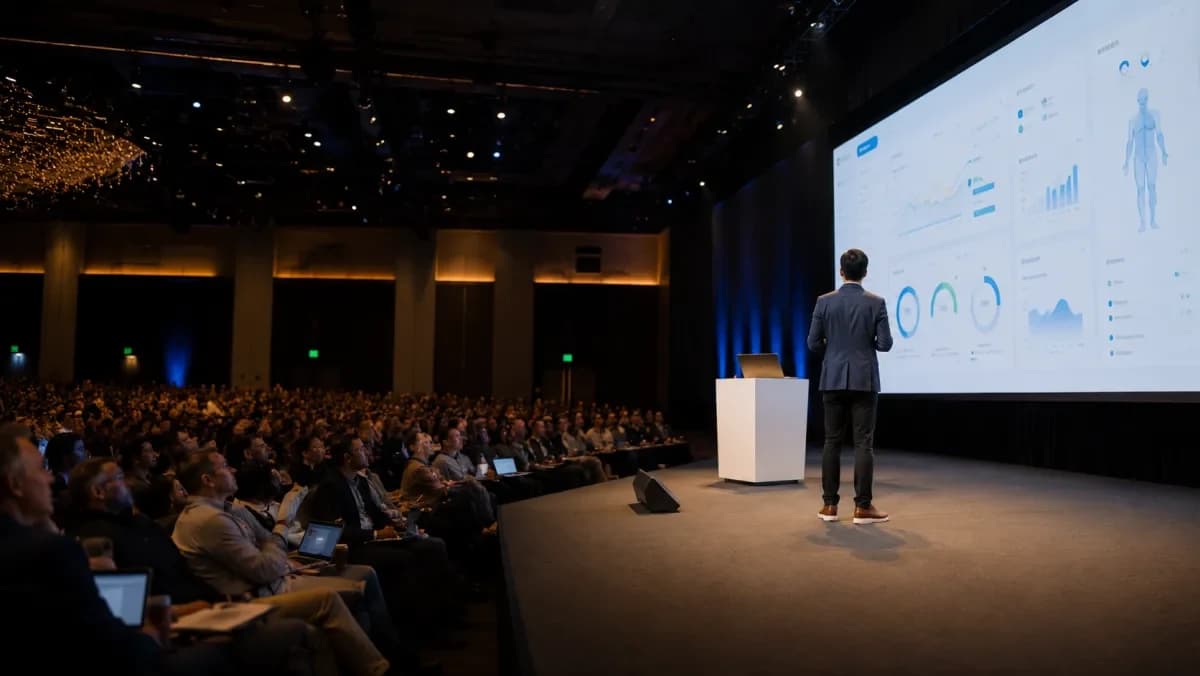
The demo runs perfectly. The interface is clean. The AI surfaces a patient insight in under three seconds. The investor deck calls it a paradigm shift. The conference panel calls it the future of care. The startup raises a Series B.
Six months later, the clinic is still using WhatsApp and a shared Google Sheet.
I've watched this gap from the inside. As CPTO at Reviv Italy and across 15+ clinics in Italy, the UAE and Turkey through PRCNX, I've been on both sides of the health tech equation: the side that builds the AI system and the side that has to get a clinic nurse to actually use it. Those two sides are further apart than most health tech coverage suggests. The demos are getting better every year. The deployment problem hasn't moved much.
This is not an argument against health tech innovation. The innovations are real and some of them are changing patient outcomes in ways that weren't possible five years ago. But the ones that work look almost nothing like the ones that get the most coverage. The gap between the two is where most of the money is getting lost, and where the actual opportunity is.
What's real and what's a press release
The health tech market is loud right now. US digital health funding hit $10.1 billion in 2024 according to Rock Health, with AI-enabled startups capturing 37% of that total, and the narrative around AI in healthcare has moved from "could this work" to "this is inevitable" almost overnight. Every major platform has a health AI story. Every hospital system has an AI pilot. Every conference has a keynote about the future of personalized medicine.
Most of it is real in the narrow sense that the technology works. The models are good. The interfaces are clean. The pilots show promising numbers. What the coverage underweights is the distance between a promising pilot and a deployed system that clinical staff use every day without thinking about it.
The real innovations in health tech right now fall into a smaller category than the headlines suggest. Three things are actually changing patient outcomes at scale. The rest is infrastructure work that matters but isn't transformative yet, or it's genuine hype.
AI-assisted clinical decision support that stays in the workflow. The versions that work are not separate tools the clinician has to open. They're embedded in the systems the clinician is already using, surfacing the right information at the moment of the decision without requiring an extra step. The versions that fail are the ones that require the nurse or doctor to leave their existing workflow, log into a new interface and ask the AI a question. Nobody does that under real clinical load. The innovation that matters is not the AI model. It's the integration decision that keeps it invisible.
At Reviv, the ML model we built for IV therapy formulations doesn't live in a separate dashboard. It sits inside the intake process the care team was already running. The recommendation appears where the decision is being made. That's why the 15% improvement in patient outcomes held in production, not just in the pilot. The model was good, but the integration decision was what made it stick.
Asynchronous patient communication that actually closes the loop. The 24/7 WhatsApp and email patient support agent we built at Reviv started from a real problem: patients were sending messages at 2am and getting responses at 9am. In a wellness and IV therapy context, that gap matters. Post-treatment questions, symptom changes, follow-up anxiety. These don't arrive on a business schedule.
The innovation here is not the chatbot. Chatbots in healthcare have been overpromised for a decade. The innovation is the routing logic: what the agent handles autonomously, what it escalates immediately and what it queues for the next clinical review. Getting that routing right is the hard part. A patient describing chest tightness should not get a hydration tip. The AI that can reliably tell the difference between a worried patient who needs reassurance and a patient who needs a clinician call is genuinely new. We built that distinction into the system before we shipped it, which is why I wrote two weeks ago about who owns the call when the agent gets it wrong.
Behavioral data that feeds back into treatment, not just reporting. The least-covered real innovation in health tech right now is the use of longitudinal patient behavior data to adjust treatment protocols in near real time. Not population-level insights. Individual patient signals: adherence patterns, symptom self-reports, appointment attendance, response to previous interventions. The AI that can look at that data and say "this patient's adherence has dropped in the third week of every treatment cycle for the past three cycles" is providing something a clinician couldn't generate manually across a panel of 400 patients.
The 33% increase in therapy adherence we saw at Reviv after launching the AI patient engagement platform came from this. Not from reminders, which everyone has built and which move adherence by low single digits. From the system identifying the specific moment in a patient's treatment journey where drop-off typically happens and intervening at that moment with the right message from the right person.
Why most health tech deployments fail quietly
The graveyard of health tech tools is not full of bad technology. It's full of good technology that clinical staff stopped using after the pilot ended.
The failure mode is predictable. A health tech company sells a tool to a clinic or hospital system. The implementation team runs a three-month pilot with a motivated subset of clinical staff. The numbers look good. The contract gets signed. Six months later, usage has dropped to the small percentage of staff who adopted it early and genuinely changed their workflow. The rest reverted to what they were doing before because the new tool required more steps, not fewer.
This happens because most health tech is designed for the buyer, not the user. The buyer is the procurement team or the medical director who approved the budget. They care about outcomes data, compliance documentation, integration with the EHR system and a clean dashboard that shows ROI. The user is the nurse who has fourteen tasks open and a patient in the room. They care about whether the tool makes the next three minutes easier or harder.
When I'm evaluating whether to deploy a new tool across the PRCNX clinic network, the question I ask first is not "does this work in the pilot." It's "does the staff member who's been here for eight years and is skeptical of every new system have fewer clicks at the end of the day." If the answer is no, the tool doesn't survive contact with real clinical operations regardless of what the pilot showed.
The health tech companies that are winning on deployment, not just on fundraising, have figured this out. They spend more time in the clinic than in the lab. They design around the existing workflow before they design the AI feature. They measure adoption rate alongside outcome data because they know one doesn't mean anything without the other.
The real bottleneck is integration, not intelligence
The most common thing I hear from founders building in health tech is that the model is the hard part. Get the AI right and the rest follows.
That's wrong, and it's costing a lot of companies a lot of time.
The model is the easy part now. Foundation models have compressed what used to be a research problem into an engineering problem. You can build a clinically useful AI model faster and cheaper than at any point in the history of the field. The hard part, the part that determines whether any of it reaches patients, is getting the model's output into the hands of the clinician at the moment they need it without asking them to change anything about how they work.
That means EHR integration, which is genuinely difficult and different at every institution. It means clinical staff training that isn't a one-day workshop. It means a feedback loop between what the model recommends and what the clinician actually does, so the model improves in the context it's deployed in rather than on benchmark data. It means governance: who approved this recommendation system, who can change it, who gets notified when it produces an output that doesn't match clinical expectations.
None of that is the AI. All of it determines whether the AI reaches a patient.
The companies I'd watch in health tech over the next two years are not the ones with the most impressive demos. They're the ones that have solved the integration problem at three or more institutions and can show stable adoption six months post-launch. That's a much shorter list than the fundraising announcements suggest.
What this means for anyone building in the space
If you're building health tech: the clinical workflow is the product. The AI is a feature. Design the workflow first, then figure out where the AI makes it faster, more accurate or both. If you're designing around the AI capability rather than the workflow, you're building something that will work in the demo and fail in the clinic.
If you're evaluating health tech as a buyer: ask for six-month adoption data, not pilot outcomes. Ask how many of the staff who were using the tool at month one are still using it at month six without anyone prompting them. That number is the real number.
If you're a patient: the innovations that will reach you in the next two to three years are not the ones on the conference stages. They're the quieter ones that your care team adopts because it makes their job easier and yours better. The AI that routes your 2am message to the right person. The adherence pattern that gets your clinician to check in at the right moment. The recommendation that shows up where the decision is being made, not in a separate tab nobody opens.
The gap between the demo and the deployment is real. But so is the distance health tech has covered in five years. The companies closing that gap are building things that last. That's the innovation worth watching.
If you're building in health tech and want to talk through what deployment actually looks like across multi-clinic operations, get in touch.
Sources
- Rock Health, 2024 year-end market overview: Davids and Goliaths
Outcome figures from Reviv Italy deployments are my own, measured in production rather than published.
This is the sixth in a weekly series on what I see in the market and hear from operators across the companies I've worked with. Next week: why most product metrics dashboards tell you what already happened, and what to measure instead.